For women of Generation Z it is easier to find a job, because artificial intelligence has not yet been introduced into entry-level jobs in female‑dominated industries.
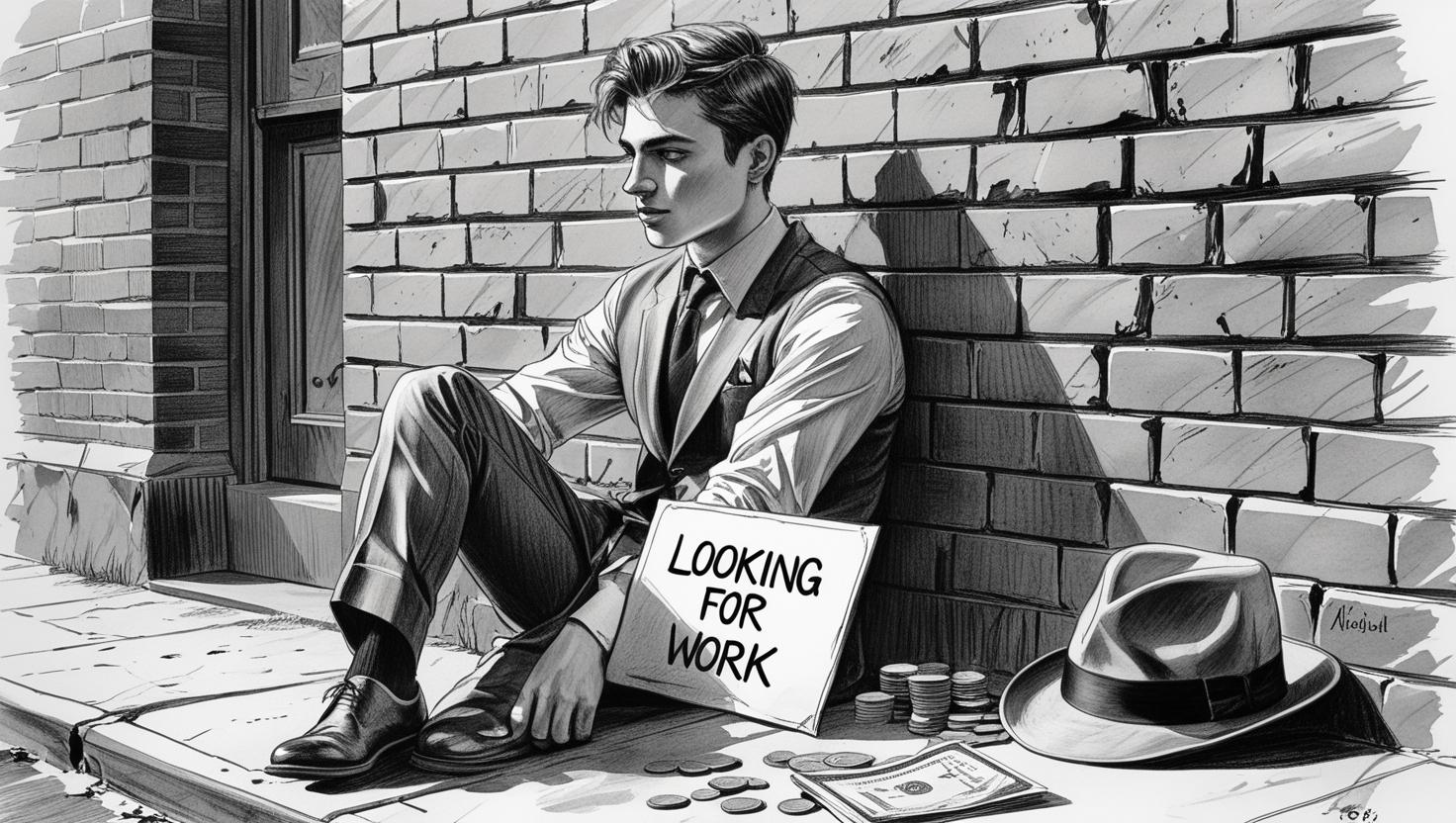
In our patriarchal society it is not often heard that men are being disadvantaged in a particular situation, but that is exactly what a new study reports. It applies to a group of people who are increasingly joining the workforce – Generation Z, that is, people born roughly between 1997 and 2012. It is precisely men of this generation who, compared with women, have greater difficulty finding work. And among other things, artificial intelligence is to blame for this trend, writes Inc.com.
Business Insider reports that among Generation Z employees – men – the unemployment rate has been higher than among women since the Covid‑19 pandemic, because in several key areas of the labor market women are dominant. Elise Gould, a senior economist at the Economic Policy Institute, explains that the situation in the labor market is such that men are simply looking for work in industries where labor demand is lower than supply. This situation has partly arisen because “employers are keeping their existing workers, and the existing workers are loyal to their employers.”
This situation that favors women has partly developed because they have traditionally been better represented in some sectors, for example, in healthcare, hospitality and education. Job data show that the number of employees in these sectors is increasing. At the same time, data from the Bureau of Labor Statistics show that the number of employees in male‑dominated fields (computer science, analytics, consulting) has grown the least. A National Bureau of Statistics study on the population of the United States shows that unemployment among recent graduates has risen from 5 to 7% in the last season.
One reason why men of Generation Z have trouble finding work in certain sectors is that entry‑level jobs are simply disappearing. And artificial intelligence is to blame, which is very understandable when we talk about the technology and financial sectors. Industry experts warn that, in order to increase the efficiency of existing employees, employers are increasingly assigning entry‑level tasks to artificial intelligence. As a result, they can hire fewer people or even cut costs by laying off existing employees.
Not long ago, both Microsoft and Google executives revealed that in their companies artificial intelligence writes about 30% of code. Meanwhile, the head of Amazon Web Services has warned that the need for human coders is shrinking. Meta CEO Mark Zuckerberg has said that he would gladly replace mid‑level programmers with artificial intelligence tools. And that is only about the job market in programming. The head of the artificial intelligence company Anthropic has predicted that within five years artificial intelligence tools could take over half of entry‑level white‑collar jobs.
Given these serious forecasts for the not‑too‑distant future, it is logical that the first trends are already appearing in the labor market. Why should you be worried about this?
The shocks in the labor market caused by artificial intelligence can dramatically affect any company that is looking for new employees, even if your company is not in the artificial intelligence sector or is not even technical. Turbulence in the labor market affects the availability of talented workers and shapes the expectations of new employees regarding you as an employer. If your company is currently looking for some fresh Generation Z ideas to bring creativity into your teams, men with technical skills are readily available.
If your company has long‑term goals to achieve a fairer, more balanced working environment, you may need to adjust some of your policies to address changes in the labor market. At the moment, you could even consider hiring more young men.
Originally published at https://inc-baltics.com/darba-tirgu-mi-pret-viriesiem-ir-nezeligaks/

Like

Love

Happy

Haha

Sad