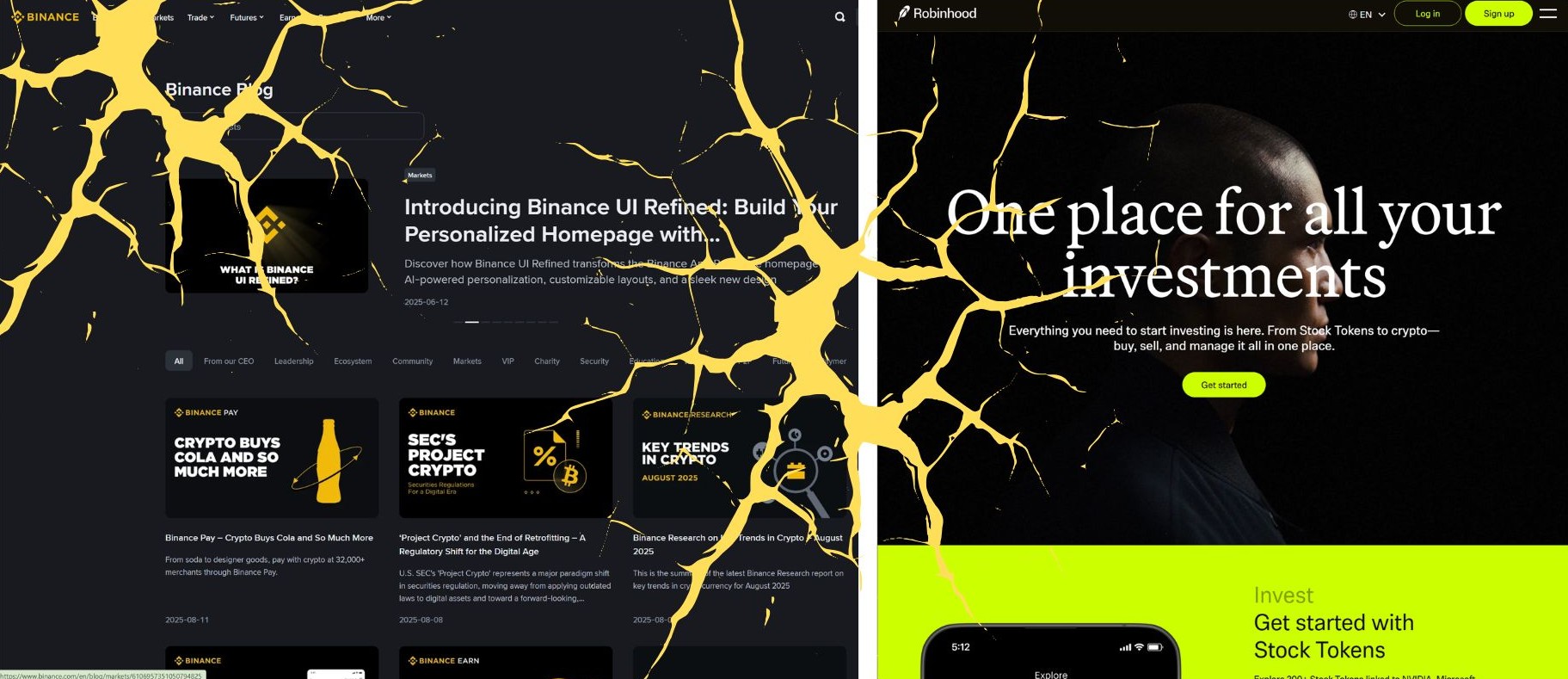
Five companies have applied for crypto-asset service provider licences and are currently in the licensing process, while another 20 companies are in the pre-licensing consultation phase. This was reported to Inc.Baltics by the Bank of Latvia. Meanwhile, by issuing a MiCA licence to the US company Robinhood, the Bank of Lithuania has ensured that the financial technology giant will open its first European representative office in Lithuania.
While the giant Binance, based in the United Arab Emirates, has been knocking on Latvia’s door for a year already, the Bank of Lithuania has secured new investment attraction from Robinhood, a company that employs 2,300 people. Last year, the company’s assets were valued at 26.2 billion dollars.
“Lithuania maintains the position of the largest financial technology center in the European Union in terms of the number of licences issued to fintech companies. A third of these companies are payment companies, so we are currently focusing on diversifying the segment. By providing the first MiCA licence in Lithuania, we want to demonstrate the readiness of the local regulatory framework and the willingness to introduce innovative products in Europe that are not yet available elsewhere,” the Lithuanian Minister of Economy and Innovation Lukas Savickas announced to the media at the beginning of July.
Lithuania has issued two other MiCA regulation licences: the right to issue electronic money tokens (EMT) has been granted by the Bank of Lithuania to the companies Ambr Payments and Blue EMI.
The Bank of Latvia has been accepting applications from crypto-asset service providers for operating authorisations in accordance with the requirements of the new European Union (EU) Markets in Crypto-Assets Regulation (MiCA) since the beginning of this year.
“The unified European regulation is relatively strict, therefore not only in Latvia but also elsewhere in Europe the number of licences issued is still not very large at the moment. Overall, we assess the interest in obtaining a licence in Latvia as good. In both the pre-licensing consultation process and the actual licensing process, the time needed to reach the outcome depends on both parties. For its part, the Bank of Latvia reviews documents and provides information very promptly; we are open and quickly accessible. Several company representatives and industry experts have already pointed to this as a positive aspect. Elsewhere in Europe this is not the case. However, it must be understood that companies themselves also need to invest work to prepare both the information and the internal company procedures so that they comply with the requirements of the unified European regulation, and this does require a certain amount of time and resources,” notes the Deputy Governor of the Bank of Latvia, Santa Purgaile.
The information on the Bank of Latvia’s website includes all market participants that hold licences to operate throughout the European Union. It shows that there are currently 54 crypto-asset service providers in the EU and 26 companies that have the right to issue electronic money tokens.
“Fifty-four licences is already a lot; the market is currently thriving, and this would be an excellent opportunity for Latvia as well to build its own competence. Objectively, Latvia has one of the best regulatory frameworks, but the country must be bold and start issuing licences, otherwise it will be too late,” says the Executive Director of the Latvian Blockchain Development Association (LBAA), Reinis Znotiņš. He points out that this field is no longer something unsafe or suspicious – the global crypto-asset market is 3.5 trillion dollars, and the US has allowed asset managers to invest pension money in crypto-assets as well.
The LBAA has calculated that if Latvia issued licences to all current interested parties, Latvia would gain approximately 100 million euros a year in tax revenue, and these companies would also employ highly qualified people, allowing an entirely new segment to be created in Latvia. “I can’t think of major global companies that are doing anything significant in Latvia or have chosen Latvia as their European home. This new financial technology segment could encourage some to do so,” says Znotiņš, adding that the Latvian Blockchain Development Association, with the support of the Ministry of Economics and the Investment and Development Agency of Latvia, is popularizing Latvia’s offer and attracting companies that would like to be licensed in Latvia, but in the end what is needed is the Bank of Latvia’s ability to make bold decisions and issue licences.
The MiCA regulation ensures that crypto-asset service providers have equal opportunities in EU countries regardless of the country in which the company obtained its operating authorisation. That is, once an operating authorisation is obtained in Latvia, a crypto-asset service provider will be able to provide services throughout the EU in accordance with the cross-border activity notification mechanism.
Originally published at https://inc-baltics.com/par-mica-licencem-latvija-interesejas-25-uznemumi-lietuva-izsniedzot-pirmo-licenci-piesaistijusi-asv-milzi-robinhood/

Like

Love

Happy

Haha

Sad