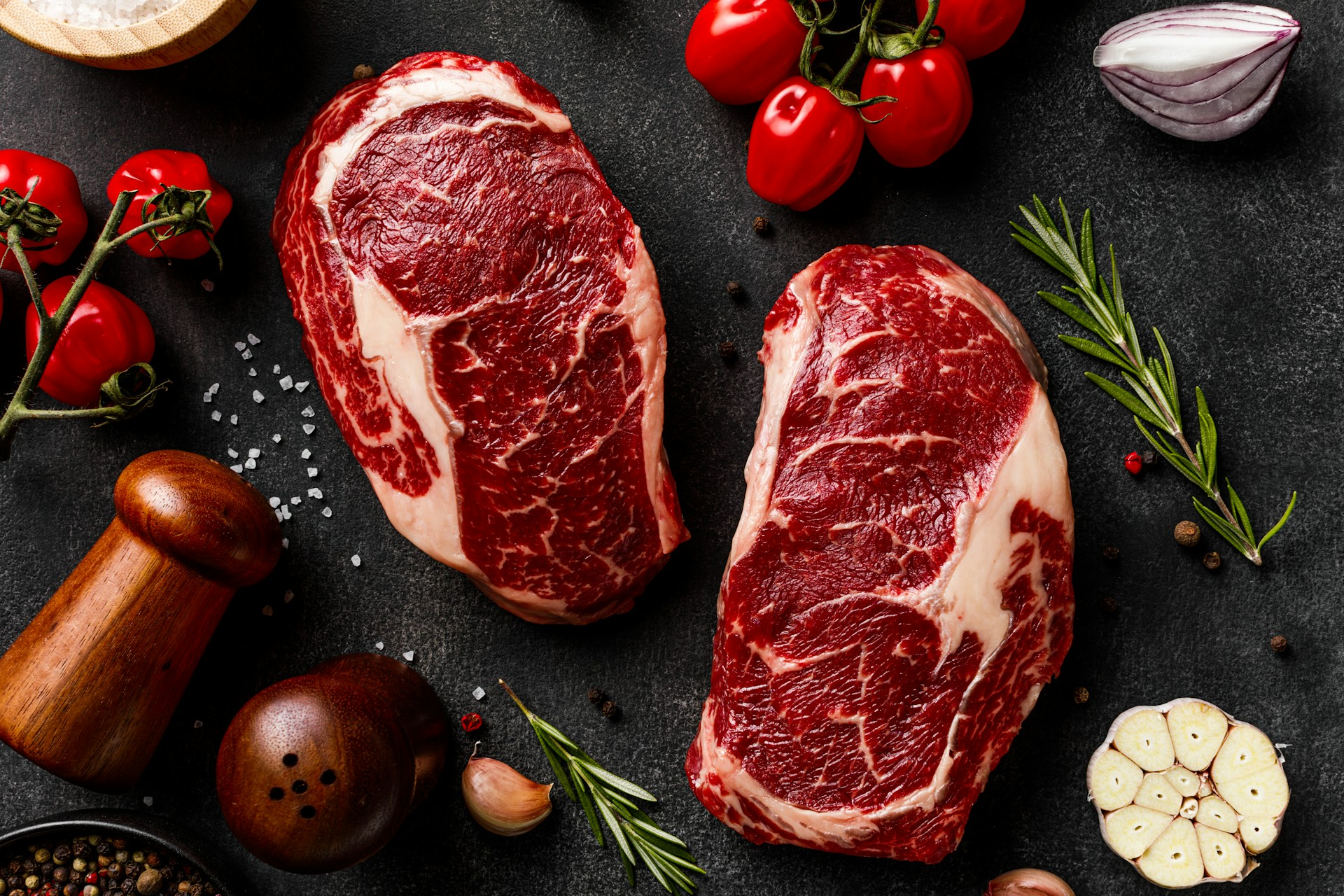
The Beef Cattle Breeders Association expresses concern that the ongoing discussions on the Mercosur trade agreement still have not provided a clear answer to a crucial question – how, in practice, effective control and supervision mechanisms will be ensured for beef imports from third countries. Without such clarity, ratification of the agreement creates significant risks for both the sector and consumers. MEP Rihards Kols, who was involved in drafting the agreement, calls these concerns unfounded.
“We operate under very high standards, but thanks to this agreement, products will enter the market for which the production conditions are not fully clear. This creates unequal competitive conditions, including in terms of price,” stresses the Chairman of the Beef Cattle Breeders Association, Raimonds Jakovickis.
“As long as control mechanisms are not clearly defined and practically verifiable, it is impossible to be sure of either the true origin of the meat or the production conditions. In the European Union, including Latvia, beef farming ensures full traceability of an animal’s life cycle – from birth to the final product, which guarantees that the product does not pose risks to the consumer and complies with strict European standards. If Mercosur is ratified, there will be direct risks for consumers as well, because they will have no way of knowing what they are actually eating on a daily basis,” adds R. Jakovickis.
The Association points out that in Mercosur countries – Brazil, Argentina, Uruguay and Paraguay – traceability in practice often covers only part of the animal’s life cycle, frequently starting from the seventh or eighth month of life, and the origin of the animals is defined in general terms. Although these countries do have national livestock and veterinary regulations, they are not equivalent to European Union requirements and cannot be fully verified.
An additional risk is related to the use of antibiotics in livestock farming. In the European Union, the use of antibiotics in animal husbandry is strictly regulated and limited, taking into account the fight against antimicrobial resistance, which the health sector has recognized as a serious and global public health problem. By contrast, in Mercosur countries the regulations and control practices may differ, creating a risk that imported meat may contain antibiotic residues, fostering the development of resistance and, in the long term, endangering human health as well.
“There is a double standard. EU farmers must comply with strict and legally binding requirements regarding animal welfare, veterinary supervision, traceability, and the use of antibiotics and other veterinary medicines, in order to ensure meat quality and protect human health, while such requirements are not applied to imported products from Mercosur countries to the same extent, or it is simply impossible to control them. We operate under very high standards, but thanks to this agreement, products will enter the market for which the production conditions are not fully clear. This creates unequal competitive conditions, including in terms of price,” explains R. Jakovickis.
These claims are categorically rejected by Member of the European Parliament Rihards Kols, who works on the Committee on International Trade. He points out that the agreement includes a mechanism that will protect EU consumers from low-quality meat. If substances banned in the EU are found in it, the agreement with the respective country in that specific section will be suspended.
He also sees no reason for concern that cheap South American meat will outcompete and destroy local producers. Firstly, because the set quota for beef represents only a tiny fraction of European Union consumption, and also because, if market distortion and pressure on local producers are felt, the agreement will be suspended. In addition, the European Union has planned a special fund of around 1 billion euros from which compensation will be paid to affected producers.
“I have a kind of déjà vu feeling about the time when the free trade agreement with New Zealand and Canada was on the agenda, which the EU concluded ten years ago. But the apocalypse has not happened. As for the agricultural sector – from my own experience, I have not noticed Canadian chicken in retail chains, nor anything of the sort. No free trade agreement has significantly worsened or wiped out any sector in the EU. Those are plain facts,” says R. Kols.
Other European Union Member States are also currently expressing concerns about the Mercosur agreement. Ireland is seeing widespread farmer protests, and the government has announced objections to the ratification of the agreement. A similar position has been expressed in France, Poland, Austria and Hungary, where the focus is on risks to competition, standards, and food safety. The agreement has not yet been ratified and has not entered into force, as decisions are still pending in the European Parliament and in the Member States, which means that discussions on the terms of the agreement are still open.
“If the European Union maintains high standards for its own farmers, they must be applied equally to imported products. Without clear and verifiable control mechanisms, it is impossible to ensure such equivalence, just as it is impossible to ensure access for consumers to safe and high-quality meat,” emphasizes R. Jakovickis.
Originally published at https://inc-baltics.com/latvijas-galas-liellopu-audzetaji-satraukti-par-konkurenci-ar-dienvidamerikas-kolegiem/

Like

Love

Happy

Haha

Sad