In recent years, Lithuanian business turnover in Latvia has become more noticeable. Data show that investments by entrepreneurs from neighboring countries in companies in Latvia, and the turnover of these companies, grow faster precisely during crises. In just the two Covid-19 years, the turnover of Lithuanian-owned companies in Latvia increased by 56%. But how are Latvians doing in the neighboring country?
It was a sunny July day when my colleague and I, pleased about launching a new media in the Baltics, decided not to repeat past mistakes but instead to expand operations in all three countries as soon as possible. That’s how we started planning our first business trip to our neighbors in Vilnius. To Vilnius, not Tallinn, because in Lithuania we already had a short, but still some, experience, and this very summer Vilnius officially became the largest city in the Baltics by population, overtaking Riga, which had held this status for a very long time. This means the city is thriving, and people want to live and work there. Our goal was just that simple – to go, take a look, and learn more about the business environment, to talk with representatives of the Lithuanian Investment Agency, to visit the Latvian Embassy in Lithuania to find out how Latvians are doing in the neighboring country, because, as is known, Lithuanian entrepreneurs are doing very well in Latvia and, just like the Scandinavians, Lithuanian entrepreneurs here also stick together. For example, we can clearly see that in shopping centers of the Scandinavian company Linstow, the anchor tenant is the Scandinavian Rimi. In the shopping centers Akropole, which belong to Lithuanians, the anchor tenant is also Lithuanian – the Maxima store, and many of the smaller stores that are Akropole tenants mostly belong to Lithuanian companies. Retail is the most striking example, but not the only one. Sticking together is only logical – it is easier to find a common language and achieve common goals.
The first task was a letter to the Invest Lithuania agency, where, after filling in a form on the website, it should have been possible to receive a reply and also subscribe to updates on the Lithuanian investment environment and success stories. Said and done! Click “send” and we wait. I never did receive a reply to my letter, but the news and marketing newsletter did start arriving regularly.
“A Defence Innovation Centre will be opened in Kaunas.” The Centre, scheduled to open in 2028, will serve as a hub for startups, small and medium-sized enterprises, and large companies to develop new technologies, including drones, satellites, and military communication systems. From 2026, more than EUR 34 million will be allocated to building the capacity of Lithuanian companies. An additional EUR 6 million will be allocated to partnerships aimed at turning prototypes into fully developed technological solutions.
“Brolis Semiconductors: a military technology innovator born in Lithuania.” In 2011, three Lithuanian brothers returned from Germany with a vision to create a semiconductor company. Today, the company provides advanced military technology solutions to 35 NATO member states and allies, playing a significant role in ensuring both regional and global security.
“NanoAvionics: from a laboratory in Vilnius to global space missions.” It all started in 2014 with Lithuania’s first university-built satellite, and today the company has grown into a space technology firm that provides satellites and missions to NASA, MIT, and Thales Alenia Space. As part of Kongsberg Defence & Aerospace, NanoAvionics is responsible for one of the largest satellite manufacturing orders in Europe – proof that Lithuania’s space industry is developing in leaps and bounds.
“Revolut: a global neobank rooted in Lithuania.” Serving more than 60 million customers worldwide, Revolut has made its Vilnius office its centre in the European Union.
“The rise of Lithuania’s biotechnology industry: EUR 7 billion in investments drives life sciences growth.” Lithuania is rapidly gaining recognition as one of the most dynamic and fastest-growing life sciences hubs in Europe. The clearest proof? A historic EUR 7 billion investment in the creation of BIO CITY, which is turning Vilnius into a major biotechnology centre and sending a clear signal to global players that Lithuania is ready to lead in this field.
These are just five of many news items that landed in my inbox in a relatively short time. Naturally, we set out to investigate. What is going on here? – I wondered and went to see for myself.
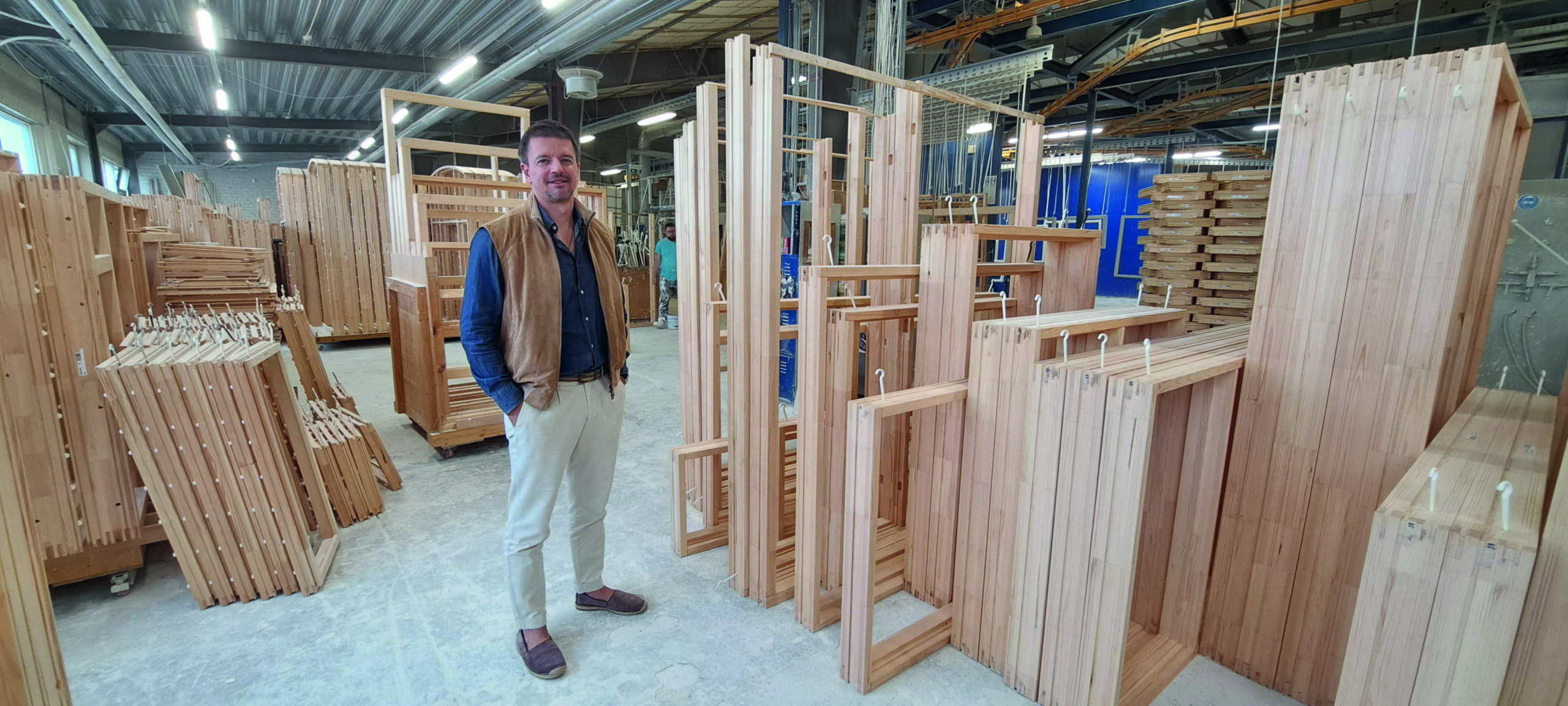
Combining the useful with the pleasant, this time our transport was a new electric car, the Audi A6 Sportback e-tron – as it turned out, an excellent car not only for short trips but also for longer journeys. We got there quickly and on a single charge, with some power still left. Audi positions it as the first electric model that does not cost more than a comparable internal combustion engine car. In fact, if previously you had to either pay significantly more for an electric car or accept a shorter driving range, now on a full charge you can drive about as far as with a full tank of petrol, and the price is similar. The price of this particular car in the basic configuration was EUR 73 thousand, and with extra equipment – EUR 108 thousand. In Vilnius we saw one identical car, and there too electric vehicles are allowed to drive in bus lanes. From the point of view of such primary infrastructure, there is not much difference between Latvia and Lithuania, except for the motorways with a permitted speed of 130 km/h. Otherwise – plenty of little annoying things that locals most likely do not even notice. For example, a charging station in the underground car park of a hotel that can only be operated with a special company app, while at the same time there is no mobile network coverage underground to download that app. Still, these are nuances you can quickly get used to, and it is not even clear that you need to. For example, Latvian entrepreneur Jānis Lasmanis, owner of SIA Arbo Windows, does not go to Lithuania by car at all. Less than two years ago his company purchased the largest Lithuanian wooden window manufacturer, Arlanga Wood, and he travels to Lithuania by plane, taking the opportunity to praise the very fact that Latvia has its own airline with convenient connections. “The finances are as they are, but entrepreneurs definitely appreciate the opportunity to get to their destination quickly,” he says, adding that there are four daily flights from Riga to Vilnius and the flight time is less than an hour. The Arlanga Wood plant is a 15-minute drive from the airport.

There is plenty of activity at the plant, where more than 130 people work and the company’s turnover exceeds EUR 12 million – since Lasmanis bought it, turnover has increased by 20%. The territory is large, and the factory is modern, though the same cannot be said of the administrative building, which was built 30 years ago and, it appears, has never been renovated. Lithuanians have always stood out for their frugality – possibly that is why they are doing better.
Finding Latvian companies in Lithuania is not that easy. There are several known to the entrepreneurs we interviewed, but there is no systematic list available, for example, at the Latvian Embassy in Lithuania or even the Latvian Chamber of Commerce in Lithuania. The Chamber’s head, Vitālijs Markūns, says that he once tried to collect such information, but in recent years these attempts have been unsuccessful. Meanwhile, Latvia’s Ambassador Solveiga Silkalna explains that in this information age, entrepreneurs do not consider assistance from the embassy particularly relevant, so they do not come and register. “From time to time we spot some Latvian brands or companies and can be happy for them,” they say at the embassy. One of the most recently noticed companies in this way is the café and coffee roastery KALVE, located right in the city centre – in the building of the five-star Marriott hotel – and it opened earlier than the hotel itself.
One of the most visible companies in Lithuania recently has been Gemoss. This summer it acquired the Lithuanian hospitality company Sangaida, whose annual turnover is EUR 16 million. For Gemoss this was a carefully considered and strategically important step that not only strengthens the company’s position in the Baltics but will also allow it to offer new opportunities to clients and partners. Sangaida specializes in the sale of professional equipment, fittings, tableware, and utensils to the HoReCa (catering) sector and also provides equipment rental, servicing, and training services. One might say that another company active in the hospitality sector is one of the largest catering businesses in Latvia, Gan Bei, which has three restaurants in Vilnius and two in Kaunas. This Latvian company employs 135 people, has a turnover of EUR 7.3 million, and earned a profit of EUR 300 thousand a year ago. Meanwhile, the company Lido has been evaluating expansion opportunities in both Lithuania and Estonia for two years now and hopes to open a restaurant within the next five years.
Overall, looking at data on entrepreneurial activity between the Baltic states, it can be said that Latvians are the most passive – more likely to sell something than to expand. For example, in 2023 there were 534 companies registered in Lithuania controlled by Latvian citizens, employing a total of 8,842 employees and with an annual turnover of EUR 1.82 billion. There was growth both in the number of companies and in turnover, but for comparison it should be added that only 381 companies in Lithuania controlled by Estonian citizens had a turnover of EUR 3 billion, employing 10.9 thousand people. Calculated by turnover per company, Latvian companies in Lithuania are on average twice as small as Estonian ones. Meanwhile, calculated by turnover per employee, Latvian companies are 30% less productive than Estonian ones and 17% less productive than Lithuanian ones.
Despite this moderate passivity, there are companies that have been operating in Lithuania for many years, even more than 10 years, in a wide variety of sectors, including the retail or B2C segment. For example, the Latvian state-owned Elektrum Lietuva sells electricity to more than 200 thousand customers and also produces solar and wind energy, while the Latvian company OC Vision, which operates under the brands Vision Express, Optio, and Lensor, owns nearly 30 physical stores and three online stores in Lithuania. The company’s co-owner, Gatis Kokins, says that overall there are no major differences between business conditions in Lithuania and Latvia – taxes are more or less the same. What is different is the attitude. For example, during Covid, OC Vision tried to raise financing and did so both in Latvia and in Lithuania. In Latvia everything went smoothly and quickly, while in Lithuania at that time it was long and painful. But only three years have passed, and the situation has changed dramatically – this June, when issuing bonds in Lithuania, everything was arranged in two days, while in Latvia all the deadlines set by law were exceeded, for example, for registration in the Land Register. “Lithuania has overtaken us here,” says Kokins. He, like Lasmanis from Arbo Windows, points to Riga’s advantage thanks to airBaltic, but promises to try taking the train in the near future.
In the B2C sector, it is also worth noting the company Longo Group, which has an annual turnover of just under EUR 50 million – almost half of that comes from Lithuania. This company is owned by Aigars Kesenfelds.
Another sector that deserves attention is B2B companies, and there are quite a few Latvian firms of this kind in Lithuania. For example, the construction company Tilts has been building roads and bridges in Lithuania for at least 10 years. Latvijas Finieris has a plywood plant in Lithuania – the company Likmere. The construction mix manufacturer Sakret also has a 15-year history in Lithuania and this year received the Namejs Award. The Namejs Award itself also has a 15-year history – it is the way the Latvian Embassy in Lithuania, together with the Latvian Chamber of Commerce and Industry, recognizes the achievements of Latvian companies in Lithuania and the mutual cooperation of entrepreneurs in both countries. This year the award was given to Brasa Defence Systems for the fastest-growing increase in exports of its products to Lithuania. The fastest growth in service exports last year was posted by the company Tilts, while the most successful joint Latvian–Lithuanian project abroad was recognized as the Baltic pavilion at the EXPO in Osaka. The best partner for Latvians in Lithuania was recognized as the company Deltatours, which organizes trips by Lithuanians to Sigulda, and the best trade partner was Akmenes cementas, which supplies cement to Sakret. Security firms have also found a common language, with Latvians naming Trikdis as their main support point. Not bad, but the full potential has yet to be unlocked.
Originally published at https://inc-baltics.com/vel-neatklats-potencials/

Like

Love

Happy

Haha

Sad