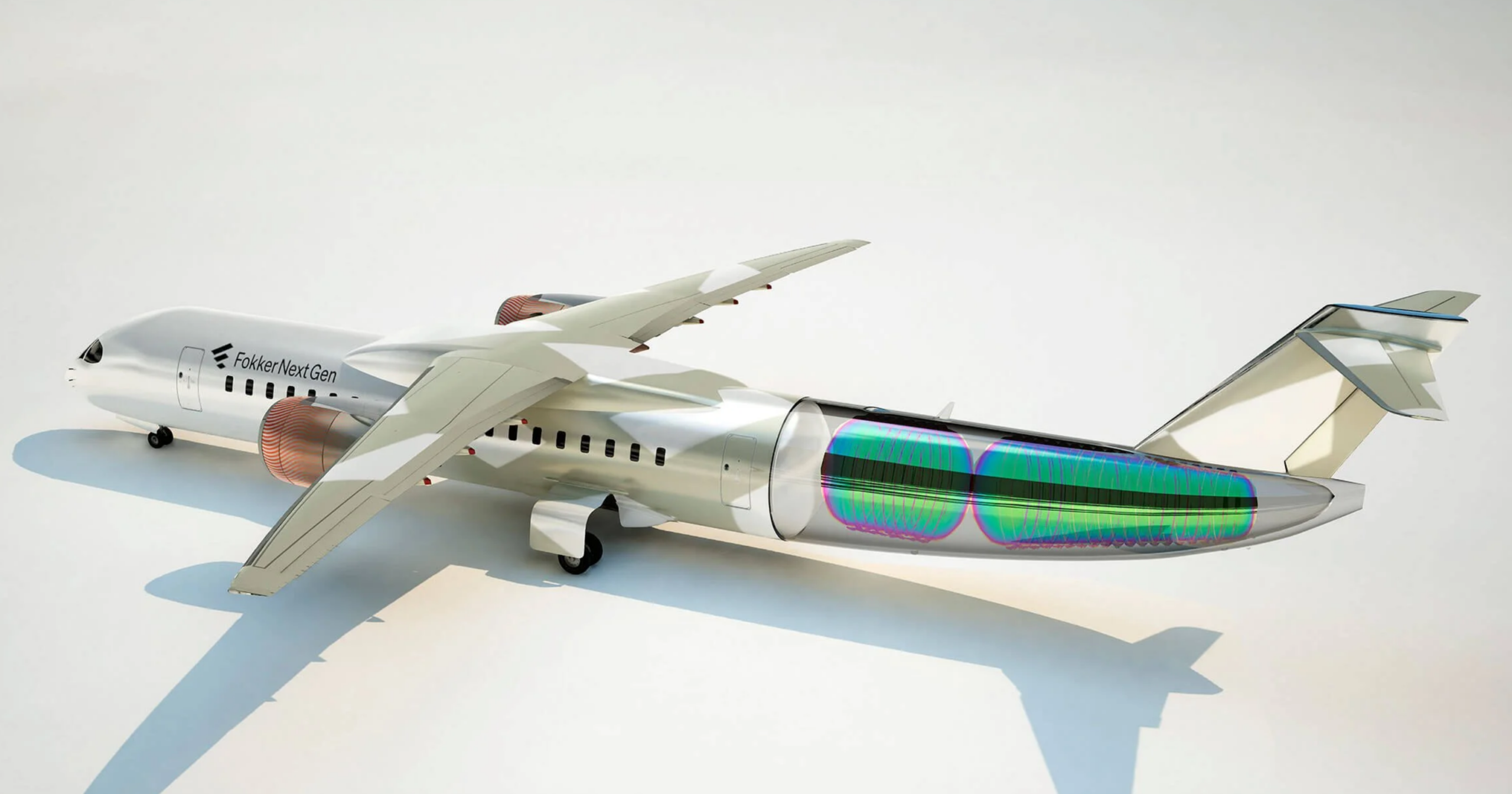
At the beginning of the week, Fokker Next Gen Latvia, which once announced that it would start work on the development of hydrogen aircraft engines in the Liepāja Special Economic Zone, began liquidation proceedings. The company’s management is not commenting on this decision, but information obtained by Inc. from unrelated sources indicates that the grand project has, among other things, fizzled out because the head of the national airline, Martin Gauss, left his position.
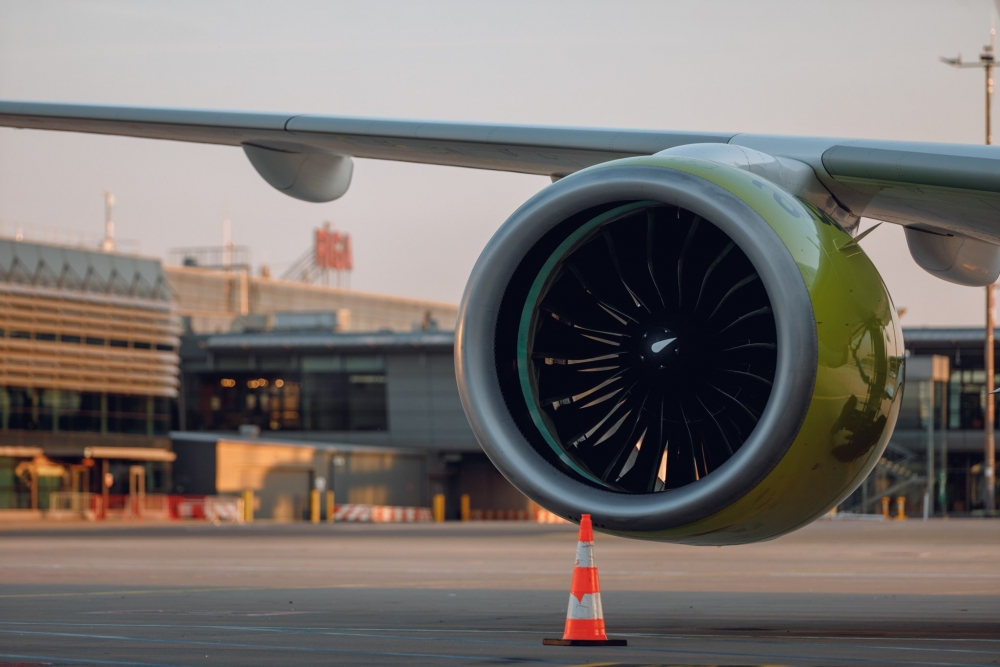
One of Fokker’s goals in opening its unit in Latvia was to obtain state funding for the implementation of its hydrogen project and an order from the national airline ariBaltic for at least a couple of aircraft. According to Inc. sources, this would have guaranteed the company legitimacy in its further search for financing. However, M. Gauss was dismissed, and this caused dissatisfaction at the company’s parent firm, Fokker Next Gen.
Even before that, the Latvian branch of Fokker had not achieved its intended goals – to obtain Latvian state co‑financing. Skeptics of hydrogen technologies had slowed down the “green corridor” for receiving public money, and the company had to compete in the open market, where it was unsuccessful. They were unable to obtain the necessary (or desired) funds in free competition, because confidence in hydrogen technologies in Latvia (and not only there) is very low.
It is precisely due to this combination of circumstances that the decision was made to liquidate operations in Latvia. Admittedly, Fokker has nevertheless found a financer for its plans, but this is unlikely to encourage the company to continue operations in Latvia.
Publicly available information shows that Fokker Next Gen Latvia was registered on 16 February 2024, with a share capital of 2800 euros. The company’s sole owner is Fokker Next Gen of the Netherlands.
In its first incomplete year of operation, which lasted from 16 February 2024 to the end of 2024, Fokker Next Gen Latvia earned no operating revenue and incurred a loss of 135,474 euros. At the end of last year, the company had invested 3944 euros in fixed assets and employed one person.
The Investment and Development Agency of Latvia (LIAA) had previously mentioned Fokker Next Gen Latvia among the largest projects that had been launched.
The Dutch company Fokker Next Gen signed a cooperation memorandum with the Ministry of Economics at the end of 2023. Fokker Next Gen had planned to develop a model of a passenger aircraft powered by a hydrogen engine, with a capacity of 120 to 150 seats. It was planned that, provisionally, aircraft of this type could reach destinations up to 2500 kilometers away.
At the initial stage of the project, it was planned to create up to 100 new jobs in Latvia over the next three years, working in cooperation with Riga Technical University and the municipalities along the Kurzeme coast.
Originally published at https://inc-baltics.com/fokker-udenraza-plani-latvija-izpleneja-lidz-ar-gausa-atlaisanu/

Like

Love

Happy

Haha

Sad