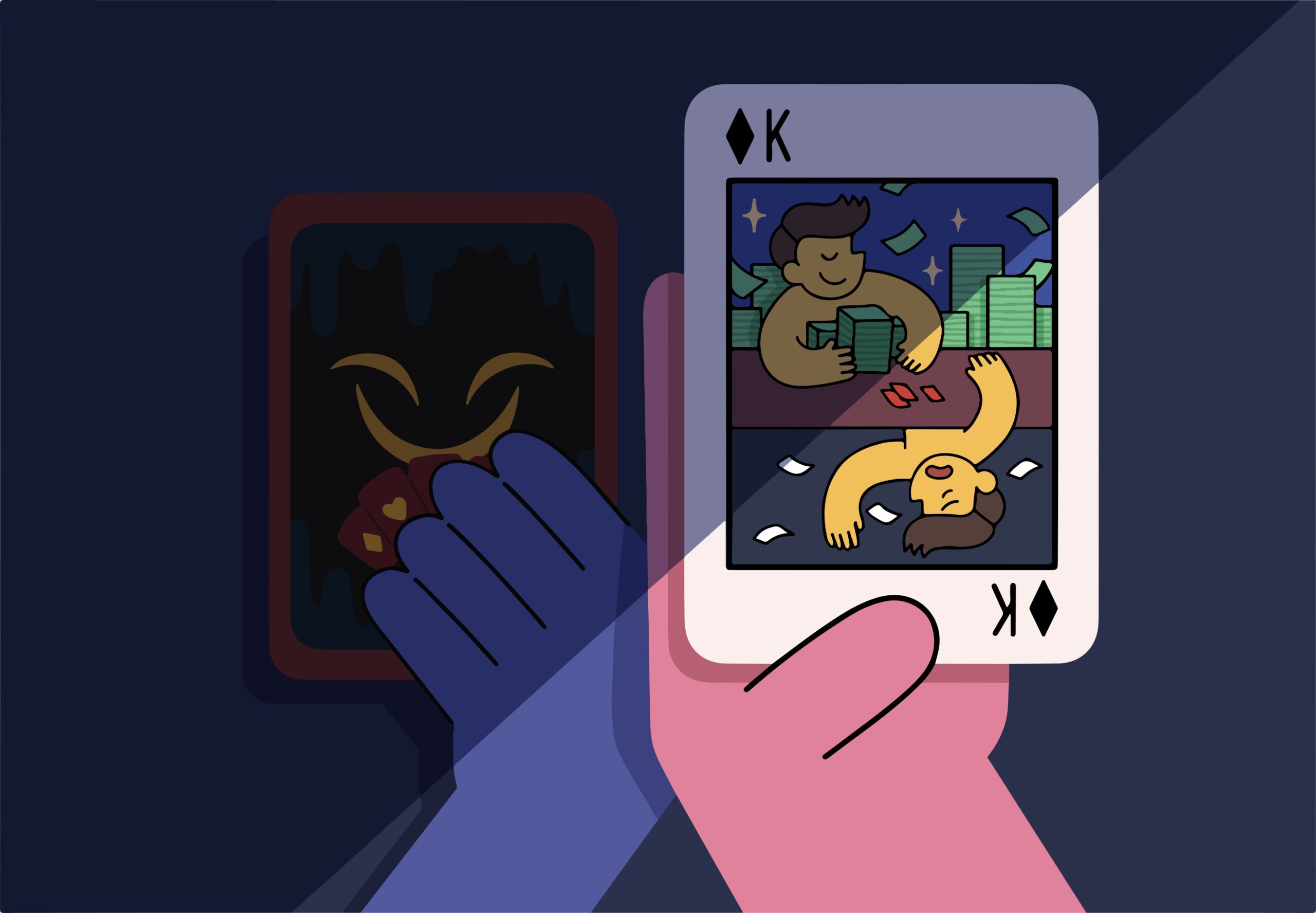
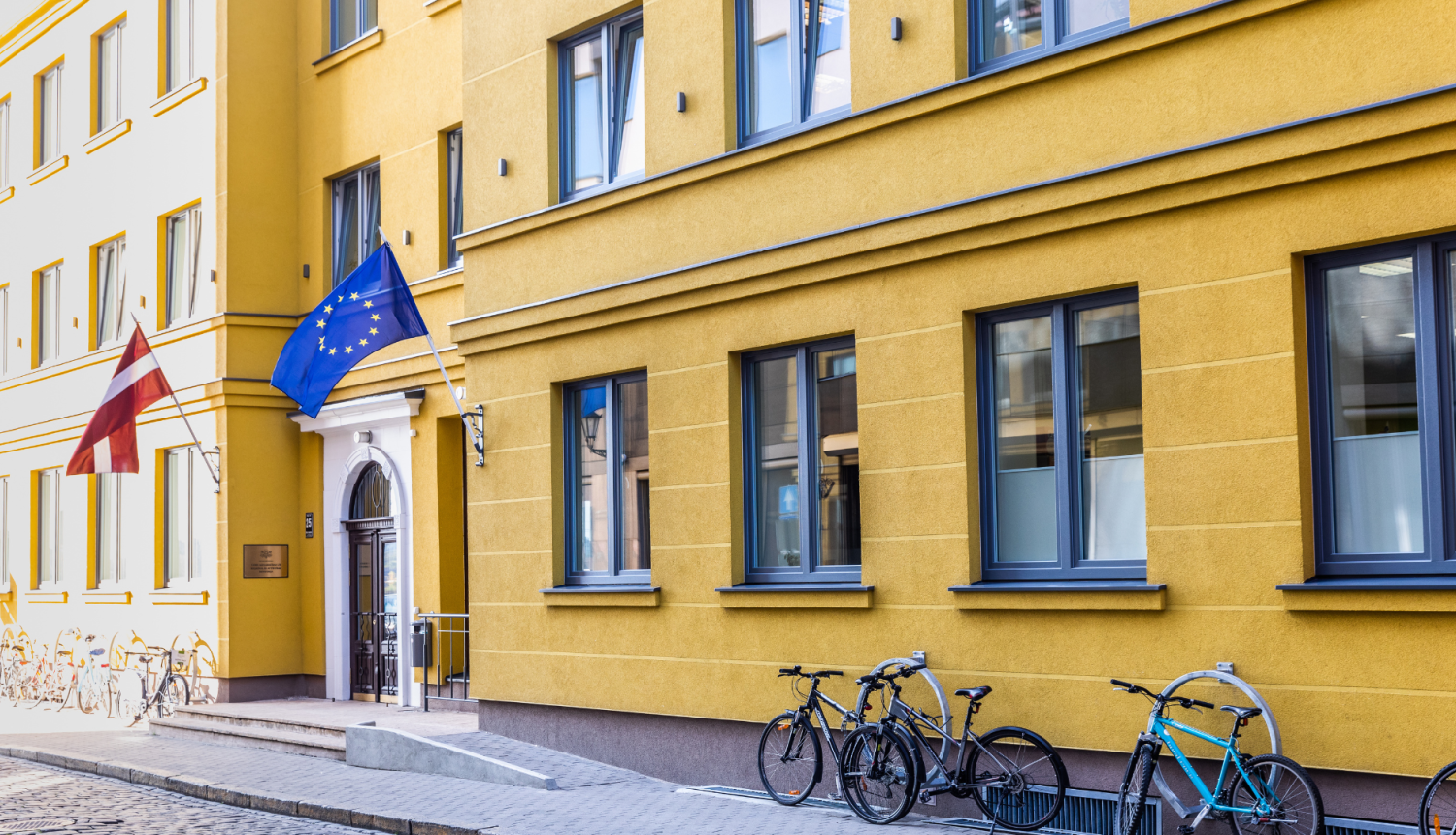
To some, such a headline may sound biased or tendentious, yet unfortunately it is true. That’s how it can turn out. On Friday, 5 December, the Society Integration Fund (SIF) will decide whether to change the existing procedure for distributing money from the Media Support Fund (SIF) by replacing the current allocation with one that foresees giving more money to online media. Given that audience size is among the criteria, there are concerns that the largest share of the funding will thus go to the portals Delfi and TVnet.
The process of allocating money from the state budget via the Media Support Fund may be unfamiliar to people not involved in the sector, so I will explain it in simple language and hope it will be relevant to every resident, not just journalists or publishers. I also warn that, apart from the numerical facts, their interpretation is my personal opinion. I believe it is appropriate to express it, given that the media I own have never applied for MAF funding and I can look at the situation from the outside.
Up until the start of the Covid-19 pandemic, the media received 742.7 thousand euros from the state in a single competition; afterwards, the funding began to grow rapidly and was divided by media type and project. In other words, so that, under the pressure of the difficulties of the pandemic, not only one type of media would remain, but that there would be both radio and the internet for young people, newspapers for pensioners, magazines, etc. Until the end of 2019, the funding was not large either. For all media in Latvia, 742 thousand euros is not very much. Moreover, there were also times when the money was “distributed” by another organisation, namely the NEPLP, and those working there actually evaluated all publications. For example, in the past NEPLP demanded back part of the funding from Baltcom for broadcasts praising Vladimir Putin.
However, during the pandemic the funding increased rapidly and there was something to fight for. It was also split into separate competitions so that, so to speak, no one “would starve to death”. Thus in 2024, 979 thousand euros were allocated to audiovisual electronic mass media, 437.7 thousand euros to audio electronic mass media (radio), 530 thousand euros to press publications, and 227.5 thousand euros to websites. All media types survived and, relatively speaking, everything was in order.

A small dispute has now broken out, as a large one is impossible given the number of interested parties. The dispute is about the fact that, despite partial preservation of the funding, the plan is to reintroduce a single competition for everyone. I do not know the criteria by which the money will be distributed, because the Ministry of Culture refused to give me the regulations before they are approved, thus creating conditions of unfair competition in which some media outlets have access to the regulations several months earlier and others do not. However, this is not so crucial in this case. Talking with colleagues from other media, I conclude that criteria such as audience size, etc., are also planned. That sounds logical, because the information should reach the largest possible number of residents. So what is the “fuss” about?
It is not quite the case that all media can be equated and compared, because they have different goals and different audiences.
People listen to radio stations for entertainment or as “background”, and the news there does not exceed two minutes, at the end of which we often hear that they were prepared with MAF support. Most often these are news items from the LETA agency, which are repeated several times a day and are not new content each time. Of course, there is also original content, various programmes, especially characteristic of regional radio stations, and these programmes are really interesting. For example, this summer, while in the countryside, I listened with interest to a programme about invasive fish species that lasted about an hour. However, the biggest costs for radio are not for content, but for broadcasting.
Online portals are mainly browsed by people sitting in offices during working hours or outside them, but still that is the broadest audience. There is an abundance of information and you can publish anything in unlimited volume. Different people watch TV and the audience changes by the hour and by age group. Newspapers are read mainly by older people, and they are still a tool of information in regions and remote rural areas. Newspapers also have to pay for printing.
Thus, for each of these media types, content creation costs a different amount of money and they are not mutually comparable. What is more valuable – ten seconds of the prime minister’s voice on the radio saying “you are listening to radio SWH”, a newspaper delivered to a lonely pensioner in a remote corner of Latgale with information about the opportunity to go to a concert, or a charity campaign published in an online medium? These are not comparable things, because each has its own role and each is in some way important.
What is planned to be done today?
Today it is planned to change the system in favour of online media, i.e. a “general competition”, the regulations of which I do not have. A conditional compromise has been found, and yet at the end of the day the biggest beneficiaries will be online portals, of which the two largest – Delfi and TVnet – belong to Estonian entrepreneurs.
The discussions were long, but the result is that for each media type the plan is to guarantee at least 250 thousand euros, which means an increase for online media, but a significant reduction for all other media types. Naturally, this is supported by online media and not supported by the others.
By the way, the discussions are another separate story in which something seems not quite right. Namely, the media themselves, civil servants, academics and lobbying organisations get together and, after a discussion, write the rules and regulations for themselves. The minutes of these meetings, which are available here, on the Ministry of Culture website, are another very entertaining read. I have seen cases in other sectors where, if, say, construction companies “help out” with the preparation of procurement documentation, they risk ending up in prison or at the very least – in the dock. In this case, the involvement of funding recipients in drafting the regulations is accepted as the norm, which to me sounds completely upside down. On the other hand – it is better than having them written by someone who does not understand the principles and costs of media work at all.
Reallocating money to online media sounds, in a way, even logical – it’s the 21st century, who needs those newspapers out in the countryside anyway, right? So, in my view, the key question here is – do we all only need online media, or also others, and outside Riga as well? And if we are not abolishing SIF/MAF, which in my opinion would be the right step, but are still keeping it… then do we want to use this money to fund Estonian media? It is not intentional, but it really can turn out that way, that the largest audience and the best project writers, due to their available resources, will be precisely these.
You will be told – no, the competition is about content, not audience…
Yes, on paper that is exactly how it is – the competition is about content, regardless of format or audience. However, one more significant fact must be taken into account here: the time when anyone actually checked the results is in the past. SIF does not check or evaluate the content that is created with state money. They say they do not have the resources. “It’s this kind of project creative-writing contest,” one of the print media publishers tells me.
I can write that, for example, my series of articles on illegal party financing will be read by 100 thousand people across Latvia, but in the end I will write the content about all the other parties except, say, one that I personally like better… then no one will evaluate the objectivity of this content. Since I have a large audience, it will count as everything being fine and the contract fulfilled.
Or, if some radio station promises 300 programmes about fishing and actually produces them, will the contract immediately be considered fulfilled? In theory yes, but what would your reaction be if, for example, in the programmes the main expert is someone who proposes holding the next fishing competition on Lake Pitelis, which is located on the Latvia–Russia border? No one will evaluate the final work here.
It may turn out that we will end up sponsoring Estonian portals with our own money. This is an assumption, the confirmation or rejection of which we will see quite soon, already in an election year.
Originally published at https://inc-baltics.com/viedoklis-sif-lems-vai-atdot-latvijas-nodoklu-maksataju-naudu-igaunu-medijiem-sarazotas-publikacijas-neviens-neparbauda/

Like

Love

Happy

Haha

Sad