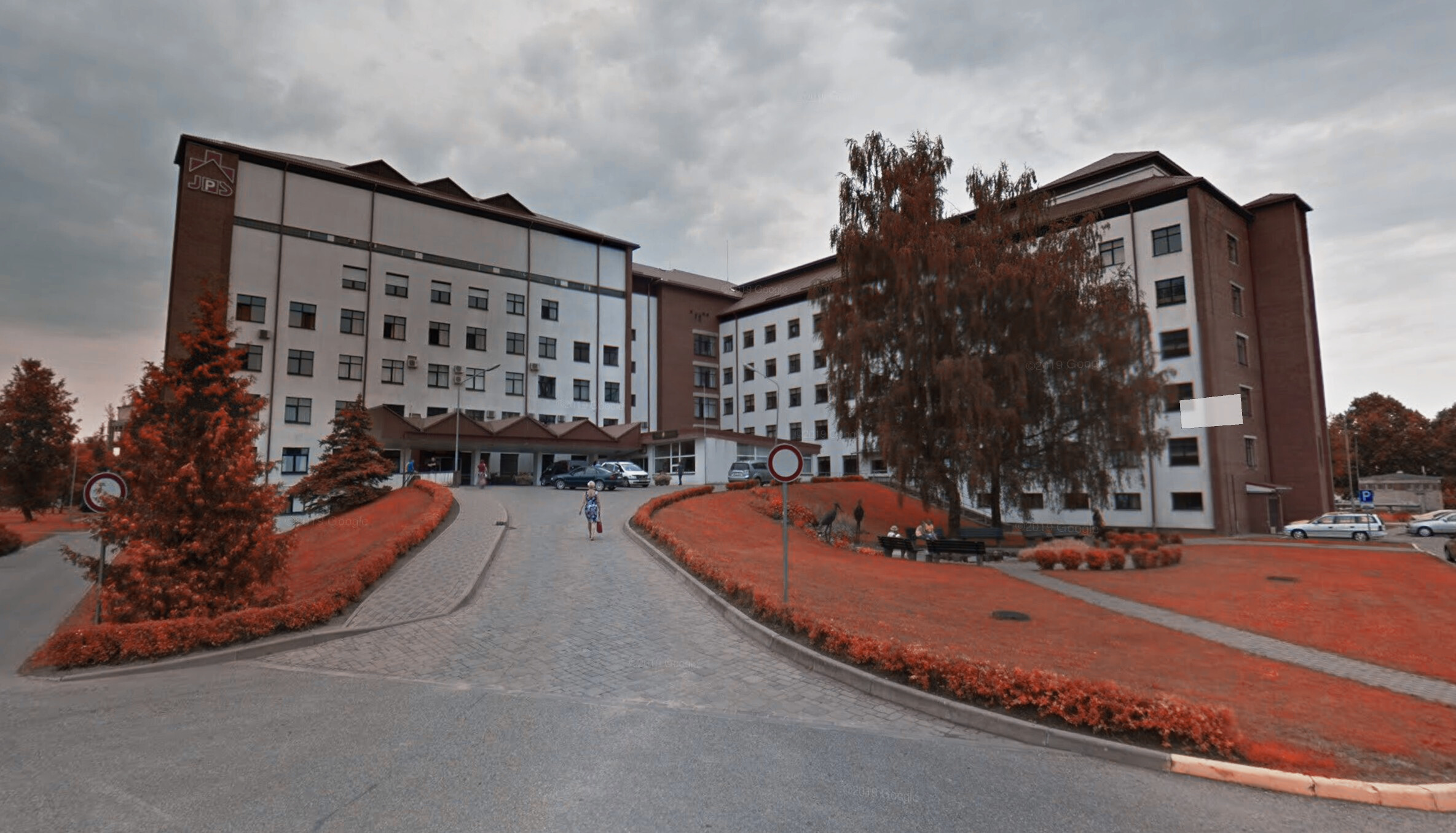
Among the medical staff of Jelgava City Hospital, concern is growing about the actions of the hospital’s acting head, Rinalds Muciņš, who was appointed temporarily and without an open competition, as these actions may significantly worsen the availability of hospital services for residents of Jelgava and the region. Moreover, his management style and methods are already undermining the team spirit and motivation of the medical staff.
The conflict between the hospital’s management and the medical staff has been smouldering for quite some time, already during the period when the hospital was also headed by its previous director, Kārlis Smilga. Since the change of power in the city, the situation has only deteriorated.
The previous hospital director, Kārlis Smilga, who held a bachelor’s degree in social sciences in economics, managed Jelgava Hospital from 2021 and also ran in this year’s municipal elections. He left his post at the hospital immediately after the elections. However, no new competition was announced, and at that time Jelgava’s executive director, Irēna Škutāne, then representing the Union of Greens and Farmers, appointed as acting head of the hospital – Rinalds Muciņš, who once ran Stradiņš Hospital but was dismissed from that position and later headed Aizkraukle Hospital.
(Updated on 5 December at 10:18) By education, Muciņš is a lawyer; he holds a master’s degree in law. Although the information on Latvijas Valsts meži’s website states that Muciņš is a member of the LVM supervisory board, Lursoft data show that he does not hold such a position.

At Jelgava Hospital there are concerns that Muciņš has no noble goals regarding the provision, in the near future, of state-funded healthcare services at this municipality-owned hospital. Muciņš’s main objective as head of the institution at present is to minimise as much as possible the financial losses that had already started to emerge under the previous management. The methods being used sometimes suggest that he does not consider what consequences this may have for the institution’s operations in the long term. The basis for this may be a lack of interest, lack of competence, or perhaps deliberate harmful action.
Information at the disposal of Inc. indicates that Muciņš is carrying out a series of actions that correspond neither to the definition of austerity nor to prudent management. For example, he is hiring new administrative staff whose necessity is questionable, while increasing the cost of service provision, leaving less and less money for the services themselves.
The State Audit Office reached a similar conclusion in its audit this year, finding that funds are often spent on maintaining infrastructure rather than on patient care and staffing.
“I have a feeling that he has been installed under some ministry’s mandate to undermine and stifle the hospital. Right now, the concern is that Muciņš wants to reduce the range of state-funded services, and he also says that paid services must be expanded. In my view, a municipal hospital must try to provide the maximum of these state-funded services for the money it has,” says one of the hospital’s doctors. He says that at present the bosses are administrators who have no understanding at all of where money can be spent and where it should not be spent.
Muciņš knows how to speak nicely and make presentations, but does not know how to organise healthcare in a regional hospital, because his experience is from working at Stradiņš Hospital, the doctor believes. “Stradiņš Hospital is nationally important, a strategic hospital. No matter how big the losses there will be, nothing will happen to them, the state will top it up, because such a hospital cannot be closed. That is why perhaps you can afford to spend there. But in regional hospitals you must be able to work with the resources you have; you cannot spend more money than there is. I think they lack that understanding,” the doctor explains. As an example, he points out that for a long time Jelgava Hospital had one board member, but since Muciņš arrived, there are now two board members. In practice, the hospital now spends not an average of 80,000 euros but 160,000 euros on the remuneration of board members alone.
The staff also point to inefficient day-to-day management: “For example, the previous head, Smilga, a year ago hired a new Head of the Operating Block, Laura Lūsiņa. He did not say anything to anyone. I come to work, and there is a new employee in front of me who says that she now works here and is the boss, answerable only to the hospital director. It turned out that she had previously been dismissed from Riga 2nd Hospital for scheming, and she had only obtained her education six months earlier. She just appeared from somewhere out of the blue,” says the doctor, adding that in a short time all suppliers at the hospital’s operating block were replaced, as a result of which expenditure in the operating block has increased by 70%. The employee is now gone, however. “She came, did her little job and left,” the doctor says in bewilderment.
The hospital doctor also draws attention to nonsensical spending, for example, a year and a half ago a Wi-Fi network was installed in the hospital, with all the equipment fitted, but now Muciņš has come and is replacing all the routers again. The same applies to towel holders, soap dispensers and similar everyday items, which in a few years have already been replaced for the third time.
“You could go on and on, but the overall picture is quite sad, because the team on whose shoulders the hospital actually functions is now falling apart and even nurses are leaving. Muciņš has no enthusiasm to defend the hospital; he is not even from Jelgava,” the doctor concludes.
Another of his colleagues, also a doctor who has been associated with the hospital for more than 20 years, agrees, additionally pointing out that this type of management started already under the previous director and that it is no surprise that Smilga ran away. He says that in earlier times the hospital was profitable and every year doctors and other medical staff received a 10% pay rise, and at the end of the year there were at least small bonuses. In the last four years, however, pay has not increased, and this year, for the first time excluding the Covid period, there will also be no Christmas party. Staff feel cheated by such actions.
“That poisonous environment which has developed with Muciņš’s arrival, where everyone is tearing at each other, is the main reason why the microclimate has been ruined and medics are simply leaving,” he says.
The financial reports published on the hospital’s website also show that the hospital’s losses are increasing rather than decreasing. For example, in the first ten months of this year the hospital operated with losses of 537 thousand euros, while in the corresponding period last year the losses were 317 thousand euros.
The media have repeatedly floated the version that the hospital is being weakened so that it can ultimately be privatised. In Jelgava, the findings of the State Audit Office from a recent audit, carried out for regional hospitals as a whole, have also not been taken into account. The audit concluded that the Ministry of Health has not ensured effective management of the network of medical institutions and the planning and funding of inpatient healthcare services. As a result, patients do not receive equivalent services in healthcare institutions of the same level, and the limited funding has not been used equally productively. Despite this, it has been indicated that Jelgava municipality currently does not plan to request an external audit for SIA “Jelgavas pilsētas slimnīca”.
Originally published at https://inc-baltics.com/jelgava-satraukums-par-bez-konkursa-iecelta-slimnicas-vaditaja-mucina-kaitnieciskam-darbibam/

Like

Love

Happy

Haha

Sad