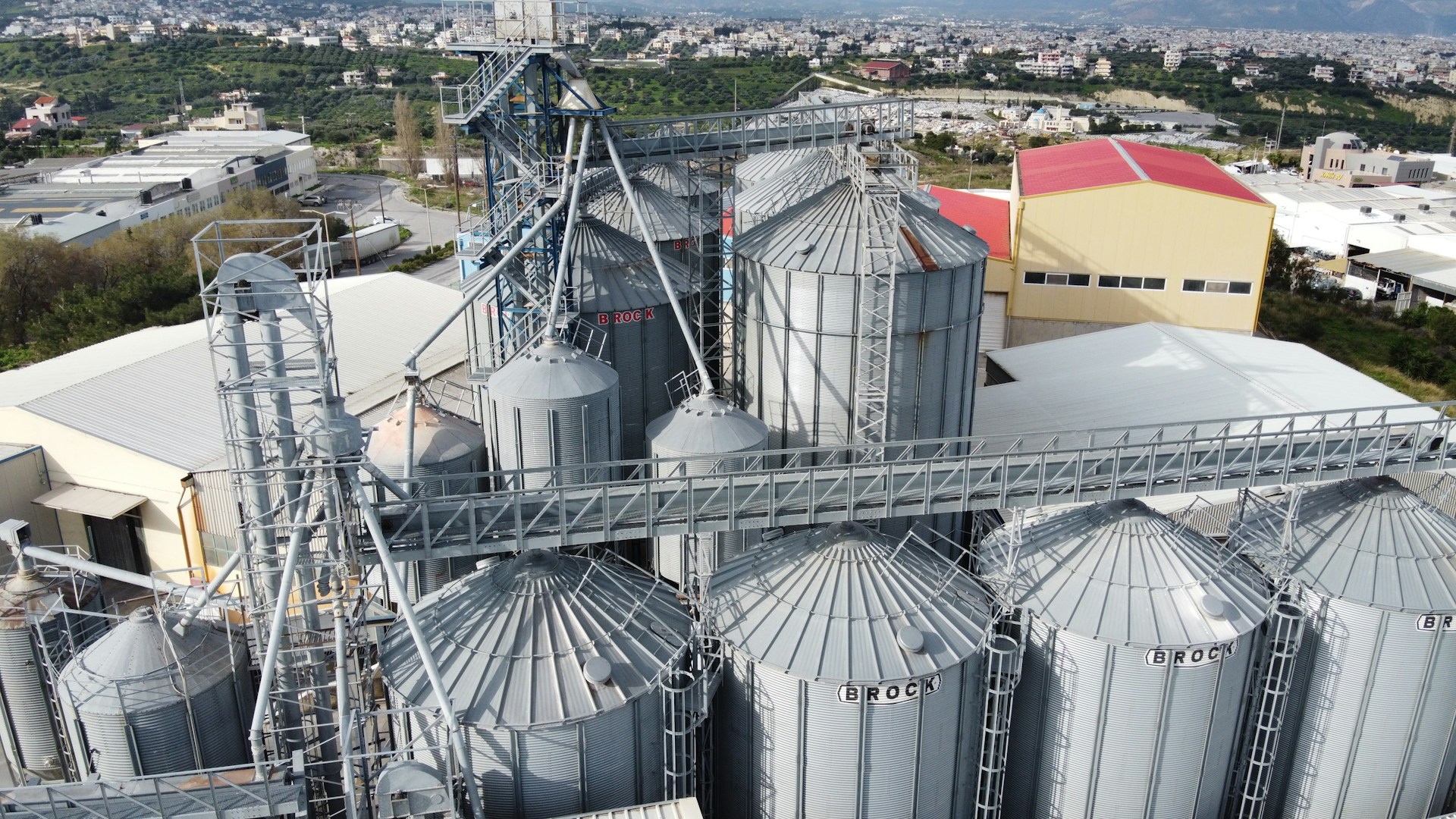
One of the most accurate barometers of Latvia’s economic health is industrial construction – the development of factories, warehouses, logistics centres and agricultural infrastructure. These facilities are not built on impulse. They are developed only when developers – entrepreneurs – feel safe and stable in the long term. Such projects require lengthy planning, substantial investment and confidence that business development will be stable not only today, but also in 3 to 5 years.
Overall, Latvia’s construction industry experienced a general decline in 2024 – total construction volume decreased, and investments in the market also became more even and slower. According to European Commission data, investments in 2024 fell by 6.7%, but a gradual market recovery and growth (+2.6%) is promised for 2025. I encourage viewing these figures in the context of developments and trends in the private construction segment, particularly in the development of large-scale projects. The factors driving construction in the public and private sectors are often very different.
Public sector projects often serve, and are purposefully developed, as economic “heaters” during downturns. State sector initiatives and orders for the construction of infrastructure facilities, road construction and building development are even recommended as a lever to stimulate the economy. In the private sector, the logic is exactly the opposite. Construction starts here only when companies feel secure – and secure in the long term. Therefore, when assessing the true growth impulses and direction of Latvia’s economy, and the trust that developers and investors place in our market and its future, it is precisely private construction – especially in the industrial and agricultural segments – that most accurately reflects entrepreneurs’ confidence in the economy.
What do we see in the private construction segment? Industrial building construction in 2024 remained stable despite the overall decline in Latvia’s construction market. The focus here was on reconstruction, building expansion and improving efficiency. According to Central Statistical Bureau data, the construction of agricultural buildings experienced a slight increase, especially in the Latgale and Zemgale regions, where agricultural complexes are being developed. The specialisation and development of Mapri Būves confirm this as well – in 2024 and 2025 we have signed contracts and built industrial facilities, including production plants, livestock facilities, logistics centres and processing centres in Latvia’s regions. This kind of development confirms that business invests only when the economy seems predictable. Moreover, these segments most often use new technological solutions: integration of biosecurity requirements, energy efficiency, automation, and others. Industrial construction is where innovation, quality and trust meet in practice. These buildings serve for decades, and their quality affects the competitiveness of entire sectors.
The Latvian Construction Industry Strategy up to 2030 clearly defines goals for digitalisation, innovation, combating the shadow economy and increasing competitiveness. However, these goals will only be achieved if industry players do not remain passive observers.

I believe that the strongest impulse for achieving these goals will come directly from the private construction sector. Why? Because here the price is not the only determining factor. Reputation, quality of work and references are significantly more important. This is where there is room for change, experimentation and discussions about new technologies, methods and solutions, and for implementing innovation in the process. The construction sector still has its own “homework” as well:
- Reducing the grey sector – although it is shrinking, its impact on reputation remains devastating. The contribution of large private clients in this area is very important, because international tender requirements and standards gradually but purposefully “sift out” grey-sector players and force them to change.
- Educating clients – too often the client chooses the cheapest solution instead of the most sustainable one. Anyone can always promise to build more cheaply, but that by no means guarantees that the building’s total costs over its lifetime will be lower if you try to save at every opportunity at the start. The industry must be able to encourage the use of modern materials, efficient technologies and a transparent approach that pays off in the long term. Such an approach is entirely possible and effective precisely in the private segment. The experience of Mapri Būves shows that by working systematically with the client and explaining the benefits of different approaches, it is private construction that most often becomes the place where new solutions are tested – for example, innovative materials such as sustainable reinforced concrete, CO₂-reducing solutions, and digital project management tools.
The future of Latvia’s construction sector does not depend on the plans of a single ministry or the outcome of a single procurement. It depends on the industry’s ability to be bold, transparent and innovative. Private construction has today become a thermometer for Latvia’s economy – and if it shows growth, then we all have reason to look to the future with optimism.
Originally published at https://inc-baltics.com/industriala-buvnieciba-istais-ekonomikas-indikators/

Like

Love

Happy

Haha

Sad