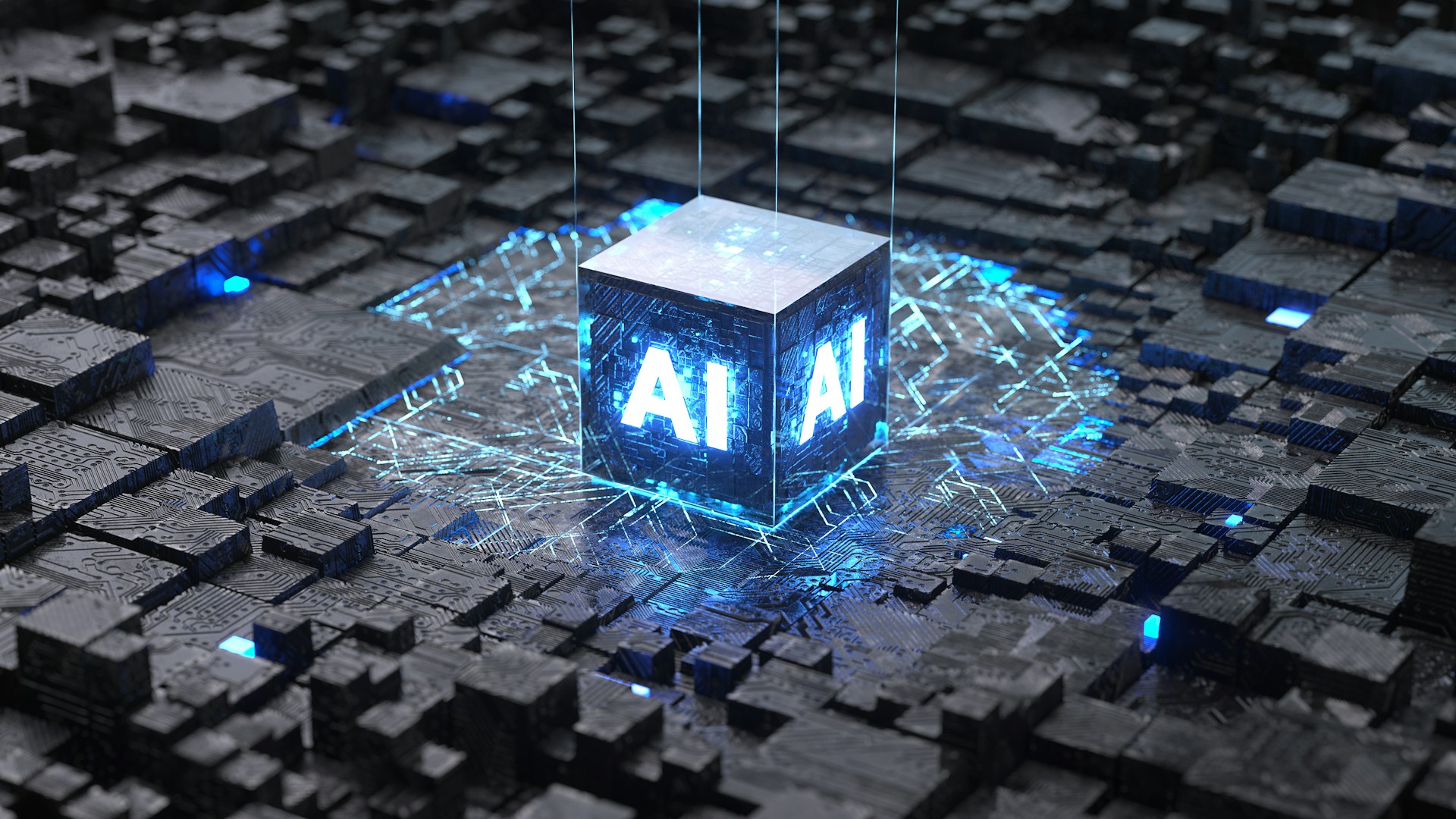
There are only two misfortunes in business: one – to ignore artificial intelligence (AI), the other – to use it in too much of a rush.
This month OpenAI released GPT-5, and the world hastily announced the death of imagination, the demise of accountants, and even the end of PowerPoint. Of course, none of that happened. Accountants are still billing by the hour, and PowerPoint is as immortal as the paintings in hotel hallways.
And yet – the pace of change is now behaving like an impolite guest. It arrives too early, speaks too loudly, and always wants to share its opinion – on everything from logistics issues to love letters. Welcome to the new normal!
GPT-5: a model that remembers more than you do
OpenAI calls it the smartest, fastest, and most useful model. Many entrepreneurs describe themselves the same way, even before their first morning coffee.
The difference is that GPT-5 really does remember. With a 400k token window, it can “hold in its head” your entire codebase while simultaneously writing a press release and a little apology note to your father-in-law.
It routes tasks between “fast modes” and “deep modes”. No more choosing between speed and depth – the model makes that choice for you. Useful, unless you enjoy arguing with a computer.
There are also personalities: Cynic, Robot, Listener, Smartypants. Clippy has grown up, discovered irony, and now criticizes your ideas. And, to everyone’s relief, GPT-5 tells you when it doesn’t know something. That’s already twice as good as what you often hear in management meetings.
The price? Almost laughable. Input – 1.25 dollars per million tokens. Output – 10 dollars. Cheaper than a coffee on the street corner. Dangerous? Yes, because a tool this cheap tempts you to use it everywhere, until you end up with presentations written by AI, read by AI, and ignored by humans.
The open-source republic
While OpenAI is polishing its crown, the open-source crowd is throwing stones at the castle gate.
OpenAI itself released GPT-OSS 20B and 120B – models that run even on a consumer computer. Imagine: running an AI app on your laptop while you’re brewing coffee.
Alibaba Qwen 3 runs simulations that make physics lecturers nervous. GLM-4.5 comes with 355 billion parameters and a dual mode: “thinking” and “shortcut”. It can plan, code, and argue at the same time.
Claude Opus 4.1 from Anthropic is another player. Less noise, more safety. A partner you can trust.
Google offers Opal – a no-code tool that lets anyone build AI apps from simple sentences. Canva – but just for workflows.
This means one thing: the game is on. You no longer need a mega budget. If you have 16 GB of RAM and the internet, you can join the race.
The republic is born. Monopolies don’t like this, but revolutions rarely ask for permission.
Agents: colleagues you never hired
The story is no longer just about models. The story is about agents. Chatbots talk. Agents act.
Google Jules can clone your repository, plan changes, fix files, and even open a pull request. It’s a developer who never goes to lunch.
Opal lets you connect AI steps into a workflow and share it with colleagues. A diagram that actually works.
Baltic companies can do this today: automatically clean the CRM, run regression tests, answer customers, process invoices.
The key to success is not in replacing your best people. The main thing is to get rid of boring routine. To give people back the hours you save.
Of course, questions arise: Who is to blame if an agent makes a mistake? What if it ignores instructions? Could an intern teach it to swear in chats with HR?
These are governance questions, but also signs of progress, because no one has ever filed a complaint about an Excel spreadsheet.
Infrastructure: the new cathedrals
Behind every AI demo stand servers, and behind the servers – electricity. The International Energy Agency predicts that by 2030 data center electricity consumption could double. AI is the culprit.
Norway is preparing to open a center with 100k NVIDIA GPUs. Investors call it infrastructure. Everyone else – the grandest cathedral. Some centers are already building gas plants for the needs of their clusters. Renewables are a beautiful dream, but grids are slow. For the Baltics this is both a risk and an opportunity. Yes, electricity costs money, but resources are close and the scale is small enough to react quickly.
Do not ignore energy. AI without a plan is like a house without foundations – beautiful in the evening, collapsed by morning.
Governance: law that will hurt
The European Union (EU) AI Act is in force. It is no longer speculation. It is law.
The Act classifies AI uses by risk level: some are prohibited, others high-risk, still others low-risk.
For Baltic companies this means mapping projects. A smart approach is not an 80-page document, but a two-page checklist.
- Register your models.
- Document your data sources.
- Track modifications.
- Record evaluations.
- Keep a human role in important decisions.
That will be enough to withstand regulators, investors, and audits. Governance is not a luxury. It is hygiene. You only notice it when it’s missing.
Small languages, big advantage
This is where the Baltics can lead. Tilde is working on TildeOpen – large models for European languages. The University of Tartu is developing Estonian NLP. The benefit is obvious. Systems that understand your language make fewer mistakes, inspire trust, and help close deals.
Imagine a legal assistant that knows Latvian legal terminology, or a travel app that writes city names correctly or describes a service in a way that sounds local.
Language is not just culture – it is business. For Baltic companies it is a moat. Global players will not climb into it.
Creativity: a studio in your pocket
AI can offer not only logic, but also art.
ElevenLabs Music creates soundtracks for ads. Google Genie 3 turns text into worlds. Qwen generates images with correct lettering.
Designers in Riga can offer moving stories. Tallinn startups – build simulations. Kaunas – create ad soundtracks without licenses.
Now the tool of creativity is an API, and the paradox is this: AI will not kill creativity. It will flood the market with mediocrity. Those who add taste to this abundance will win.
OSINT: intelligence for entrepreneurs
Open-source intelligence is not just for journalists. It is becoming a tool for business owners too.
Amnesty YouTube DataViewer and InVID let you pull out metadata, verify timing, and save frames.
For Baltic companies this matters. Signals are in the open. You can track competitors’ campaigns, save evidence before it disappears, and spot a trend before it shifts.
Information has always been power. Now it’s in the metadata.
The next 90 days
What should entrepreneurs do? 10 steps.
- Automate three routine processes: invoices, CRM, contracts.
- Test one agent: Jules for code, Opal for workflows. Measure the hours saved.
- Try local models: TildeOpen, Tartu. Speak like a neighbor.
- Write a two-page checklist. Attach it to procurement.
- Calculate electricity consumption. Count watts before profit.
- Launch a creative pilot project. Music, images, stories. Publish one.
- Train the team with real tasks. Five in each department.
- Run an OSINT sprint. Map signals, document them.
- Maintain a model registry: versions, data, evaluations, owners.
- Appoint a responsible person. AI never bears the blame alone.
You will need discipline, a spreadsheet, and the will to start.
The most common mistakes
- Thinking that strategy is enough. Without action, it’s philosophy.
- Automating exceptions. Automate routine.
- Treating compliance as decoration. The EU Act will hurt. Better to brush your teeth every day.
- Ignoring electricity. Electricity is the silent CFO.
- Assuming English is neutral. It can make UX harder.
Where does this lead us?
In the last six months AI has moved from conversation to coordination. Models think, agents act, tools connect. Infrastructure is under increasing load. Laws are coming into force.
Our task is no longer to believe. The task is to choose.
Which models? Which agents? Which processes? Which languages? Which contracts?
The answers will differ. The habit will be the same: test, measure, adapt.
AI is not destiny. It is a tool. For the Baltics it is a chance to punch above its weight class – if we do more than we talk.
The boundary has exploded. Accountants are still alive. PowerPoint is eternal. Only one question remains – will Baltic companies move as fast as the machines? And if not – no disaster. You will still forget your passwords.
Originally published at https://inc-baltics.com/maksligais-intelekts-ir-uzspradzis-bet-neuztraucieties-savas-paroles-tapat-aizmirsisiet/

Like

Love

Happy

Haha

Sad