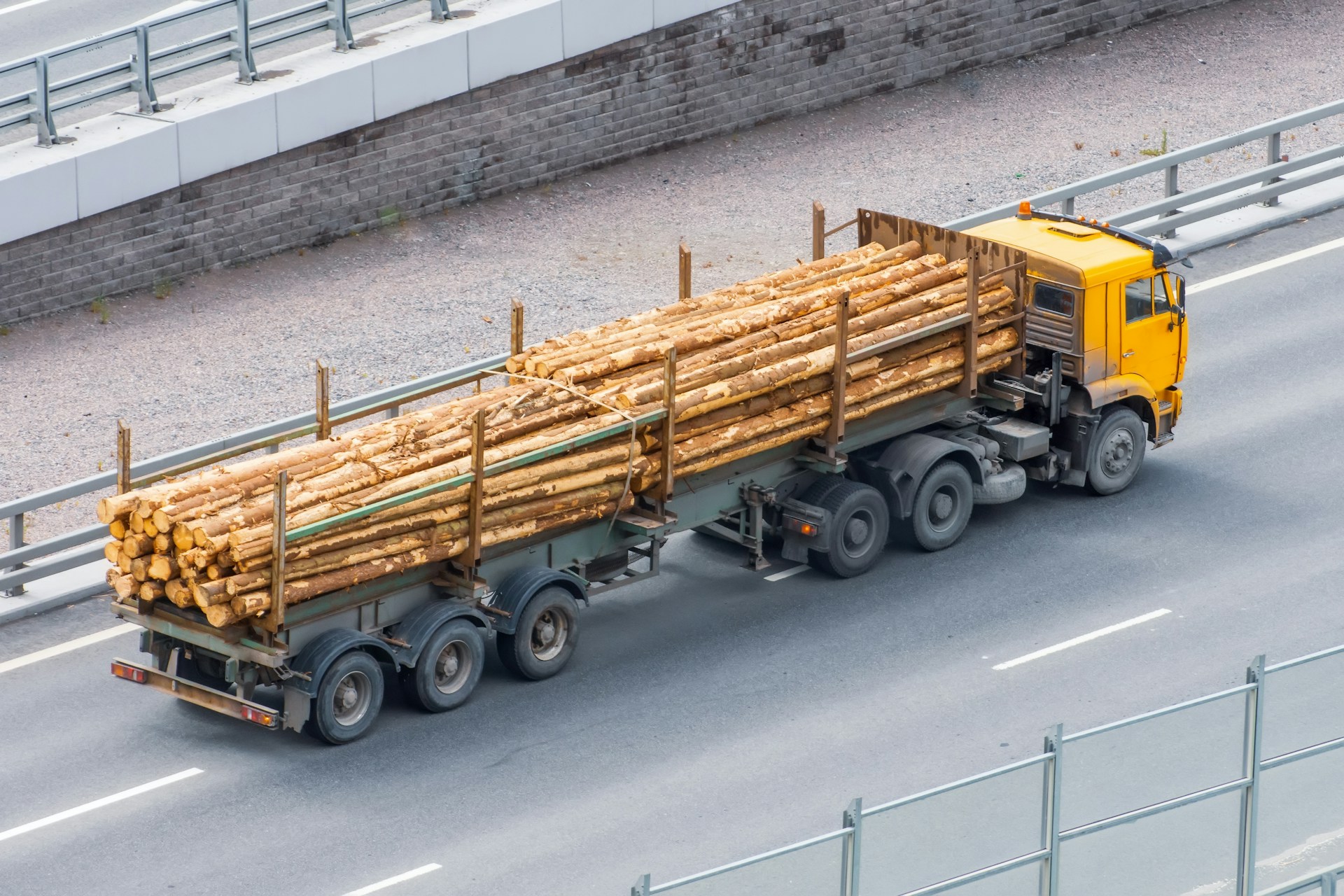
As of the first day of 2026, the road user charge will increase significantly – the largest tariff hike will affect owners of the most environmentally friendly (Euro VI) internal combustion engine heavy goods vehicles. The Ministry of Transport has prepared such a draft law. One of the reasons for raising the tariffs is unscrupulous drivers who, by avoiding roads where the charge is applied, damage roads that are not suitable for such heavy loads.
The Ministry of Transport reports that a problem has been identified: part of the heavy freight traffic deliberately uses state roads that are not included in the road user charge (ALN) application zone, thus avoiding payment of ALN. This practice leads to a disproportionate load on these roads, which are often not technically designed for such intensive traffic.
Overall, the country’s main roads, which are the principal transit and domestic freight corridors, are still subject to substantial loading from heavy road transport, which accelerates pavement damage and significantly shortens road service life.
“Carrying out regular road repairs requires substantial state budget funds, while with current revenues from ALN the statutory objective of the charge – promoting the maintenance and development of the country’s main and regional roads – is not being achieved,” the Ministry of Transport states.
Therefore, to increase this revenue, the ministry proposes, for example, to raise the annual rate for the “least green” (Euro 0, I, II) heavy goods vehicles with a gross weight from 3,001 to 3,500 kilograms from 510 to 630 euros, or by 23.5%. For vehicles with a gross weight from 3,501 to 12,000 kilograms, the ALN rate will be increased from 760 euros per year to 870 euros, or by 14.4%. Meanwhile, for particularly heavy vehicles with a gross weight of more than 12,000 kilograms, the ALN rate will rise from 1,220 euros per year to 1,450 euros, or by 18.8%.
The Ministry of Transport believes that increasing the ALN rates will not only help finance road maintenance and repairs, but will also encourage businesses to make greater use of rail services. According to the ministry, it is considered that the increase in the charge will also contribute to achieving green targets and reducing various emissions.
However, in percentage terms, the largest ALN increase affects exactly the greenest heavy vehicles. Specifically, for the “greenest” (Euro VI and even less polluting) vehicles with a gross weight from 3,001 to 3,500 kilograms, the charge will rise from 260 to 360 euros per year, or by 38.8%. For vehicles with a gross weight from 3,501 to 12,000 kilograms, the charge will increase from 380 to 480 euros per year, or by 26.3%. Meanwhile, for green vehicles with no more than three axles and a gross weight of more than 12,000 kilograms, the annual charge will increase from 420 euros to 700 euros, or by 66.6%.
That said, zero‑emission, i.e. electric, vehicles may travel on any roads free of charge – their owners will not have to pay the fee. Until now, such vehicles were treated as Euro VI class and had to pay the corresponding charge.
Together with the increase in the charge, the Ministry of Transport also plans to expand the road network for which ALN must be paid.
In Latvia, the road user charge applies to heavy goods vehicles with a maximum gross weight of more than 3 tonnes that travel on the state’s main and regional roads that have been designated as toll roads. The amount of the charge is differentiated depending on the vehicle’s weight, number of axles, emission class, and the period of use – day, week, 9 months, month, year.
ALN revenues are directed to the maintenance and development of state roads.
Originally published at https://inc-baltics.com/ieverojami-paaugstinas-autocelu-lietosanas-nodevu/

Like

Love

Happy

Haha

Sad