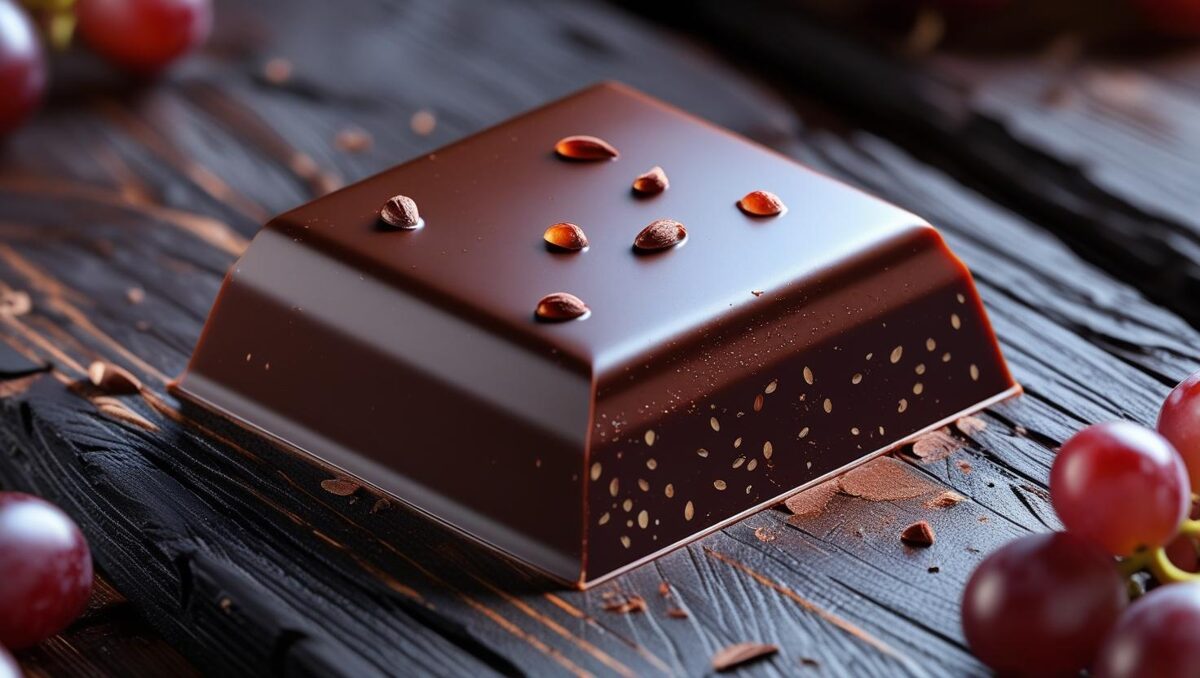
Voyage Foods produces alternatives to products such as coffee, peanut butter and chocolate. But is chocolate really chocolate without cocoa?
! The original article is available on inc.com. The article has been translated with the help of artificial intelligence. It has been checked by an editor and contains no factual errors, but the language style has not been edited.
Prices on chocolate shelves are starting to taste a bit bitter. In 2025, chocolate production costs are expected to rise by 20 to 30 percent, according to a J.P. Morgan report, which will likely result in consumer prices increasing by 10 to 19 percent. By the end of 2024, cocoa prices had reached historic highs, raising serious questions about the future of chocolate itself.
Enter Voyage Foods. The Oakland, California–based startup Voyage Foods is offering an innovative approach by reinventing the chocolate recipe and completely eliminating cocoa beans. Its cocoa-free chocolate is based on grape seeds, which are processed from wine industry byproducts and combined with vegetable oils, sugar, sunflower protein flour, natural flavors, sunflower lecithin, and salt.
“Raw cocoa beans in nature do not taste like what we usually perceive as chocolate. Chocolate is the end product that results from ingredients and a process that includes fermentation, roasting, and other treatments,” says 32-year-old founder and CEO Adam Maxwell. “Our task was to find alternatives to cocoa beans that can deliver a similar taste, aroma, and feel.”
The alternative sector
Voyage Foods was founded in February 2021 and has raised more than 117 million U.S. dollars in venture capital to pursue its mission: to rethink everyday products using allergy-safe and climate-resilient ingredients. It has created beanless coffee, peanut-free peanut butter, and a chocolatey, creamy spread without hazelnuts, similar to Nutella. According to Crunchbase data, the company is one of the best-funded startups in both the alternative chocolate and coffee sectors. Its peanut butter alternative is already available in select Walmart stores in the U.S. But retail is not the main goal. From the very beginning, according to Maxwell, the company’s plan has been to operate as a B2B (business-to-business) ingredients supplier.
“We are not going to compete with Mars or Nestlé as candy makers,” says Maxwell about the cocoa-free chocolate. “Our impact in this industry will be greatest by helping these companies achieve their main business objectives.”
In 2024, Voyage Foods took a significant step by entering into a partnership with Cargill – a global food industry leader and major chocolate distributor. Cargill works with more than 60,000 food companies worldwide, including about 2,000 in chocolate and cocoa. The agreement signed in April makes Cargill the exclusive B2B distributor for Voyage Foods’ chocolate alternative and allows production capacity to scale significantly.
According to Cargill, the partnership was driven more by the desire to expand its customer base, including the growing number of environmentally conscious and allergy-related consumers, than by the situation in the cocoa market. All Voyage Foods products are free of the 9 major allergens, such as dairy and nuts.
“Predicting cocoa prices is very difficult,” says 59-year-old Cargill chief technical officer Florian Schattenmann. “We are not doing this as a cost-saving measure. We are doing it to expand our portfolio and provide more options for consumers.”
According to a Future Market Insights report, the global market for allergen-free food products is expected to grow from 50 million dollars in 2025 to more than 100 million dollars by 2035. At the same time, studies show growing consumer interest in sustainability – in a 2024 survey, 78% of respondents said sustainability is important when choosing products or retailers, and 40% were willing to pay more for sustainable options.
How it’s made
Voyage Foods produces its cocoa-free chocolate in a 26,400 m² facility in Mason, Ohio. Although the product has not yet been fully launched at industrial scale, the company hopes for an official rollout in the coming months, once final plant permits are in place.
Currently, the alternative chocolate is produced in chip and wafer form – both formats suited to industrial use. Maxwell says it can be used in equal proportions in recipes and baking – it has the same feel, consistency, and mixing properties as traditional chocolate. But what about the taste?
This is not a chocolate you would want to eat as a bar, nor is it meant to be. There are two main varieties – a semisweet version, designed to resemble 55% cocoa chocolate, and a “milk chocolate” that is similar to mass-market chocolate like Cadbury or Hershey’s, says Maxwell.
Both versions are sweet with notes of toasted marshmallow, but a larger bite more strongly recalls the taste of hay or cardboard (the author has tried it). This aftertaste was especially pronounced in the semisweet version and lingered for nearly an hour. However, melted over salted almonds, even the semisweet seemed harmless – it fulfilled the role of a sweet coating with a creamy texture.
“Chocolate is very different, for example, from milk, where there are many 2% milk options on store shelves that taste almost the same,” says Maxwell. “If you’re used to high-end Belgian chocolate, that’s not our niche. But when it comes to mass products – cookies, bars, candy bars – that’s definitely the segment we’re in.”
Maxwell says it took a year and a half to develop the first convincing chocolate alternative, and the final product will continue to evolve. He envisions it being used in chocolate chip cookies, glazes, croissant fillings, and ice cream coatings. Cargill is already developing several product prototypes for its customers, including CPG manufacturers, foodservice companies, retailers, chocolatiers, and industrial users.
Voyage Foods’ research process involves studying food at a microscopic level to determine which compounds create classic flavors. Why grape seeds in particular? They contain a high level of polyphenols – the main flavor components that cocoa provides in chocolate – as well as similar fibers and proteins, says Maxwell. The technology is not exclusive to grape seeds, however – the company has also tested cranberry and pomegranate seeds with promising results.
The process of turning grape seeds into a chocolate-like product is similar to traditional chocolate production, using similar roasting and grinding methods that are adapted to the flavor profile of the new raw materials, based on food science.
“Our chocolate factory looks very similar, if not identical, to the largest chocolate production plants around the world,” says Maxwell.
What happens next
Record-high cocoa prices at the end of 2024 followed several years of intense market volatility caused by climate change, labor shortages, and constrained supply chains.
Maxwell does not disclose the price of the alternative chocolate but emphasizes advantages such as price stability and supply security under these unprecedented conditions. For some buyers, the main benefit may be the product’s sustainability profile – the semisweet product generates 61% less carbon footprint, reduces land use by 90%, and consumes 95% less water than traditional chocolate, according to an independent assessment from Sphera Solutions.
“These are very substantial sustainability benefits that can be leveraged both in marketing and in a company’s carbon reporting,” says Maxwell.
Cargill notes that any cost savings will depend on the state of the cocoa market – currently prices are fluctuating around 10,000 U.S. dollars per ton.
“We are looking at it from the standpoint that it must not be significantly more expensive,” says Schattenmann.
He also notes that Cargill will initially offer this product to U.S. and European customers – starting with a select group of leading chocolate companies in each region. He does not reveal names but says various joint research projects are under way.
“Companies are currently trying to understand how to position this,” says Schattenmann. “Whether to replace an existing brand or introduce it as an addition – that’s important so as not to confuse consumers.”
Looking ahead, Voyage Foods plans to expand not only its cocoa-free chocolate products but also its entire portfolio, with a focus on core ingredients.
“Our strength lies in how we can help the world’s biggest brands solve the problems they are already trying to solve,” says Maxwell.
Originally published at https://inc-baltics.com/sokolades-cenas-strauji-pieaug-bet-sim-uznemumam-ir-risinajums/

Like

Love

Happy

Haha

Sad